


In recent family devotions we were reading through the book of Hebrews. The whole book is fascinating and worthy of study, but chapter 12 caught our eye. It gives us important principles for the rearing of our children, but it also gives us a historical snippet that tweaked my historical curiosity. The writer reminds his readers, “You have not come to what may be touched, a blazing fire and darkness and gloom and tempest . . . But you have come to Mount Zion and to the city of the living God” (Heb. 12:18, 22, English Standard Version).
That prompted the question, “What is he talking about?” Where is this profound contrast displayed on the pages of Scripture? The answer came quickly. He is talking about the context of God giving his law on Mount Sinai, recorded for us in Exodus 19:9–25. Almighty God had recently rescued his people from slavery in Egypt. They had learned to survive under brutal taskmasters. They were free from Pharaoh but not free from Almighty God. Now they would have to learn to live under the rule of a just, holy, righteous God who could not condone sin. He would also prove to be jealous. He came in power, shaking the very mountain on which he dwelt. His warnings were designed to strike fear into the hearts of his special people. They begged that he not speak to them anymore!
In a recent family gathering we were reminiscing about family practices during the great depression. We remembered that Saturday night was a special time, for the whole family had to take a bath as preparation for Sunday worship. We did not have a luxurious shower, or even a bathtub. We were as poor as church mice. All we had was a cistern for a source of water and a large metal tub in which to bathe. We even made our own soap. With six children in the household, the water got a little grubby. It was highly desirable to be first in line.
Such was tradition. But it was also highly enforced law in our home. We had to take a bath on Saturday night. How did that originate? Where did that practice find its footing? If pressed, our godly parents could have appealed to Exodus 19:10, where God instructed Moses to “go to the people and consecrate them today and tomorrow, and let them wash their garments.” Before God would come down the mountain to speak to his people, he demanded that they wash their clothes. Jewish practice necessitated not only the washing of their garments but also the washing of their bodies. On the third day, God was going to come down the mountain and speak to them. They were to be clean and neat, not grubby or dirty. Almighty God was going to hold audience. His people had to be sanctified, for their Maker was and is a most holy God.
In some of our churches, the evening or vesper services are casual. Sunday morning might require a coat and a tie, but shorts or blue jeans will do well for vespers. We barely remember that God is coming to speak to us through his Word. We are meeting the king of the universe, but we act as though it were a picnic in the park.
Another practice that might need some serious reflection is our almost soporific reading of the Law. (Soporific means sleep-inducing.) We can almost cite Exodus 20 from memory. Some churches do it without fail and without variety; congregants may think this is a good time to let our minds wander to more important stuff. Maybe, for good effect, we ought to read the passage from Exodus 19:9–24 instead. Let those scenes unfold before your eyes. Listen to the warnings that God himself gives. Do not even come near this mountain. Do not let your goats or your sheep set foot in the foothills. If you are not careful, everyone who touches this mountain will die! Maybe, just maybe, in that context, the law of God will have a more lasting impact in our lives.
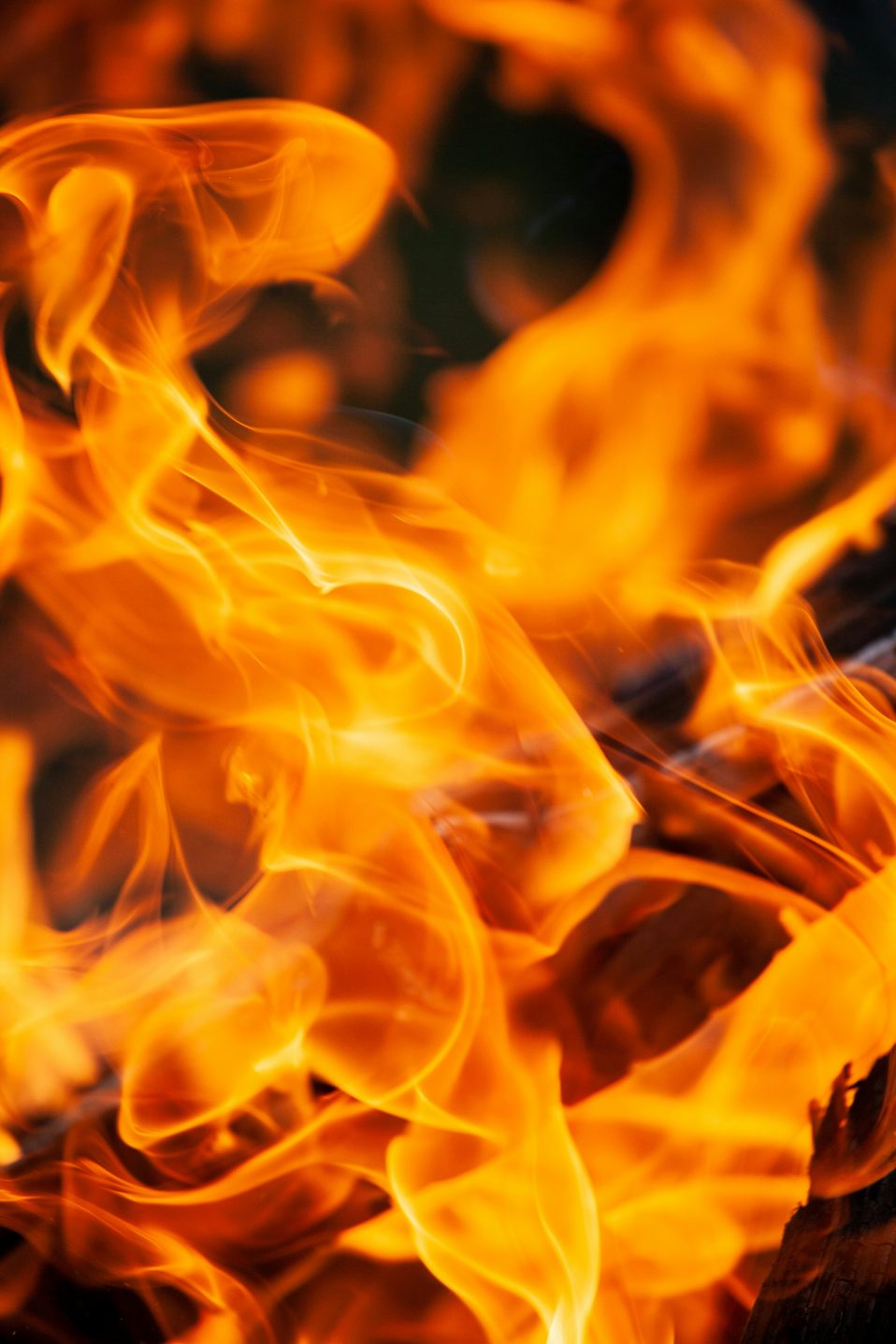
When God comes to his people, to give them his law, he does it by coming to Mount Sinai, also known as Mount Horeb. He comes not in the form of a pillar of cloud or a pillar of fire, as he had done when he led them out of Egypt. He comes instead with unmistakable warnings: “Take care not to go up into the mountain or touch the edge of it. Whoever touches the edge of the mountain shall be put to death” (Ex. 19:12). The writer of Hebrews emphasizes that “if even a beast touches the mountain, it shall be stoned” (Heb. 12:20). The scene continues to strike terror in the hearts of God’s people. On the morning of the third day, thunder, lightning, trumpet blasts, and smoke enveloped the mountain. The message was clear: your Maker is a holy God who will not tolerate the presence of polluted humans or animals. Do not even consider coming close to him. He is holy! His holiness is emphasized throughout the Old Testament. Watch out! Stay far away!
Allow me to digress for a minute. Did you ever wonder how and why the Greeks came up with their characterization of Zeus? For the Greeks, their Father God, Zeus, lived on a mountain and roared about with loud crashes, earthquakes, and fire. Zeus lived on Mount Olympia at a place called Delphi. According to their legends, periodically he spoke to his people from that vantage point. On the entry to his temple at Delphi, the Greeks even acknowledged the God of the Hebrews by name. The Greeks knew all about Mount Sinai and the book of Exodus. They did not know the whole story, but they knew just enough to fabricate a false religion.
Many of us miss that picture of God on Mount Sinai, also known as Mount Horeb. We prefer to focus on the babe in the manger or the Savior on the cross. The writer of Hebrews, whoever that might be, does not. He reminds us of that powerful imagery in Hebrews 12:18–24. Hebrews does not give us the Christmas story but helps us understand the Old Testament and the superiority of Jesus Christ. He is superior to angels, to the sacrificial animals, and to the priests who administered those sacrifices. In a classic part of that message, the author reminds his New Testament readers: “You have not come to what may be touched, a blazing fire and darkness and gloom and a tempest” (Heb. 12:18). The voice of God on that occasion “made the hearers beg that no further messages be spoken to them” (v. 19). Moses’ response was to exclaim, “I tremble with fear” (v. 21).
In sharp contrast, the author, inspired by the Holy Spirit, reminds them, “But you have come to Mount Zion and to the city of the living God, the heavenly Jerusalem” (Heb. 12:22). Yes, the giving of the Law should strike fear into our hearts, but we should not linger there. We need to rejoice in our salvation. We need to cast our eyes on our heavenly home, where the living, loving God welcomes us with open arms. We need to project ourselves into our eternal mansion where there is no more sin, no more sorrow, no more suffering, no more hatred. If we are in Christ, we are already experiencing the joys of heaven. It is not evil or sinful to reflect on that scene from Mount Sinai, but that is not where we have to continue our focus. Yes, it is good to be reminded of our corrupt, sinful nature. It is good to remember that every human being is guilty of original sin. It is helpful to reflect on the doctrine of total depravity, remembering that such characterizes every person in the world. Apart from God’s redeeming grace, we all are inclined to evil and to sin. Now, because of his Spirit, we are inclined to sing his praises, obey his laws, and encourage others to follow suit.
If Mount Sinai can be labeled as Position A, and if Mount Zion can be labeled as Position B, how do we get from A to B? How do we move from a God who hurls lightning, thunder bolts, and death to a God who promises life, and love, and fellowship? Did God change his image, his persona? Did he somehow come to realize that an angry deity who could not tolerate so much as a touch was a nonprofitable model? Did his advertising agencies persuade him to adopt a new business logo? Are we to understand God in the same way we try to analyze the business models of the twenty-first century?
The answer has to be a resounding no. God did not change. He did not choose to become user-friendly. Quite the contrary: he continued to demonstrate his wrath against sin when his people chose to worship a golden calf that their own hands had formed. When they attributed that useless piece of molded metal to be the god that brought them out of slavery, their righteous God threatened to destroy every one of his own special people. Finally, after listening to Moses’ arguments, he limited the death penalty to a mere “three thousand men of the people.” To further demonstrate his anger, “The Lord sent a plague on the people, because they made the calf ” (Ex. 32:28, 35).
God did not and does not change. He always hates sin. He always hates evil. But how then do we explain the amazing contrast between the events on Mount Sinai with the throne room of heaven? How can we explain the scene that John gives us in Revelation 7? How is it possible that John could see “a great multitude that no one could number, from every nation, from all tribes and peoples and languages, standing before the throne and the Lamb, clothed in white robes, with palm branches in their hands, and crying out with a loud voice, ‘Salvation belongs to our God, who sits on the throne’” (Rev. 7:9–10)?
The answer is found in two words: the cross! As Paul so eloquently points out, the cross is the crux of Christianity. The cross is the point where God’s wrath against sin reaches the boiling point. The cross is the place where the Father’s hatred against sin becomes so intense that he sends his own sinless Son to pay the price for all of the sins committed by his disobedient, rebellious children. He sent Jesus to die so that they and we might live. Because he consigned his own Son to die the most painful, the most despicable death known to man, our sins are paid for. Because of that focal point in the history of the world, “there is therefore now no condemnation for those who are in Christ Jesus” (Rom. 8:1). With their sins taken away and remembered no more, there is no reason to deny them entrance into the throne room of heaven. No more reason to tremble and to fear the presence of God. Quite the contrary, we are welcomed into his presence. No more worry about dirty clothes either, for all the saints in glory will wear linen robes of pure white.
When you think ahead to heaven, don’t forget about Mount Sinai and the way your God warned you about your coming into his presence. At the same time, reflect on the cross and the manner in which your sins were washed away. Rejoice then in your salvation. Marvel at the mercy of a just and holy God who would sacrifice his own Son so that we might live forever in his presence.
Norman De Jong is a semi-retired pastor in the Orthodox Presbyterian Church.