


Scriptural Preparation 2 Timothy 4:1–5 Psalm 106:34–39
Lesson Commentary
The signs of the times will be seen both within and without the Church. As the Scriptures foretold, an unbelieving world of lawlessness will finally lead to a complete, visible collapse of the social structure of society. Likewise, these signs of change will be unmistakably found within the Church.
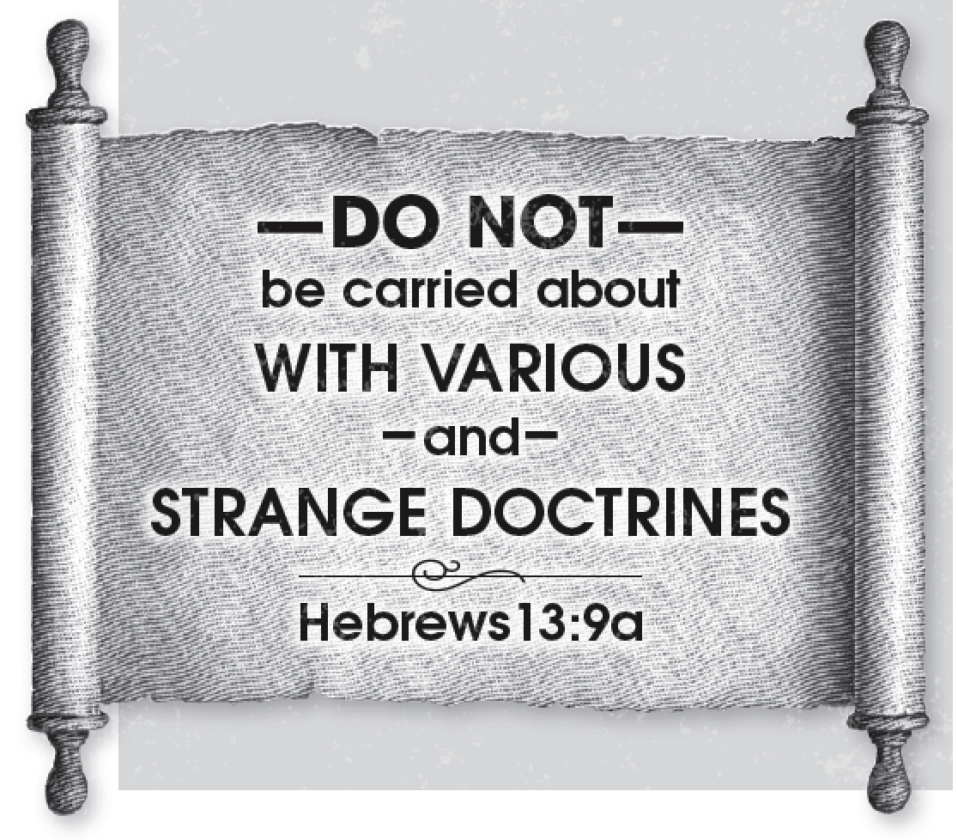
Paul exhorts Timothy to preach the Word of God faithfully and in all its fullness at every opportunity, because he was not only fully capable but also duty bound to do so. Today, too, every opportunity must be used to preach the Word faithfully because there will be a time in the future when it will no longer be able to be preached and received. Sound doctrine is what the soul needs to live and grow. Paul points out that during the last days men will not endure sound doctrine and preaching; thus it will fall on deaf ears. These will be days when even confessing Christians will not desire to hear sound doctrine because their souls have become sick, causing them to rebel at this needed diet. Therefore, we need to feed our souls now. We must nourish them while we can. Followers who receive and believe sound doctrine will then be fortified against the coming epidemic of spiritual sickness when it makes its appearance. At that time men will have “itching” ears. They will determine for themselves what they want to hear. They will desire more and more entertainment in worship. To them preaching will need only to be pleasing to their emotions. This is the hallmark of superficiality. Their mindset will not allow them to be challenged. They will not allow their hearts to be affected, and they will only let their senses be “tickled.” To obtain what they desire, men will follow teachers who conform to their own lusts, because mankind by nature quickly tires with the waning popularity of their present teachers. They will then seek new entertainers with new ideas who strive to measure up to the standards which they themselves have set up in their desire to be entertained rather than to hear the true preaching of the Word and sound doctrine. The writer of Hebrews sums up this danger by saying, “Do not be carried about with various and strange doctrines. For it is good that the heart be established by grace, not with foods which have not profited those who have been occupied with them” (Heb. 13:9).
Furthermore, when people cannot endure sound doctrine, they will turn away from the truth, the Word of God. However, a question arises, since man was created with an inborn need for religion, how will this need be satisfied without the truth and the Holy Spirit? Sadly, instead of returning to sound doctrine, man will turn away from the truth and turn toward idolatry and fables. This is false religion, and it is the enemy of true religion. Thus continues the sad story of the ages for much of humanity. These phenomena have been seen in the history of the Church again and again. Look once more at the Old Testament historical record of Israel’s up-and-down cycles of true and false worship along with the acts and deeds that accompanied them. Remember also, sound doctrine was already being neglected in the later days of the apostles. Think about Paul’s many warnings to the Church and to Timothy. Think also about the reasons that the various Church councils were called over the centuries as well as during the time preceding, during, and after the Reformation.
Then, too, let no one be so bold as to say that our present day is free from the evil of relaxed doctrine and false religion. Look only to the offshoots from the present-day Church. Are they doctrinally pure? Doctrinal laxity grows and becomes more palatable because doctrinal purity does not have the glamor of feel-good entertainment. Then the question becomes, how long will they exist? Certainly there are still many believers who desire to feed on the “strong meat” of Scripture, but their number is decreasing. Could this be a reason for the decline in Church membership and in attendance in the United States over the last fifty years?1
The desire for religious entertainment is on the rise. But questions naturally follow. They promote the need for introspection and evaluation. Just how far we have succumbed to this desire is difficult to gauge. What is the reason that entertainers claim more success, or larger numbers of followers, than those who proclaim the “everlasting gospel”? What is the reason that sects and cults can grow by seeming leaps and bounds? Can this be because they seem to satisfy man based only on an appeal to man’s concept of personal innate worth without the need for rebirth, self-denial, and belonging to Christ in body and soul for time and for eternity?
Let us always be faithful followers of the everlasting Lamb of God!
Searching Scripture
2 Timothy 4:1–4
1. For what reasons does Paul charge Timothy to preach the Word?
2. What is “sound doctrine”? (2 Tim. 4:3–4; 1 Tim. 1:10–11)
3. What is unsound doctrine? (2 Tim. 4:3–4)
4. Calvin calls “fables” (2 Tim. 1:4) useless imagination by which the simplicity of the gospel is corrupted. Give examples of what this means.
5. How is this gospel to be proclaimed? (2 Tim. 4:2)
6. What do the words in this text mean in relationship to 2 Thessalonians 2:9–12?
Psalm 106:34–39
1. What happened in Israel when it departed from God’s truth? (Ps. 106:34–39)
2. How might we apply this in terms of today’s lifestyle?
1 Samuel 15:10–16:13
1. A crisis came to Israel because of sin and the kingship of Saul. What does Samuel say to Saul after Saul tried to explain what took place in the battle with the Amalekites? (1 Sam. 15:19–23)
2. What does the Lord say to Samuel when he is to choose a king from among Jesse’s sons? (1 Sam. 16:7)
3. What does this passage have to say about true worship versus false worship?
Jeremiah 19:4–15; Ezekiel 16:15–34
1. What happened when Israel sought to worship in the way of unbelief? (Jer. 19)
2. What went along with Israel’s departure from God’s way of worship? (Ezek. 16; 1 Kings 11:1–9)
For Discussion
1. Why are entertainers able to claim more followers?
2. How and why do cults and sects develop?
3. Give examples of present-day cults and sects.
4. How can sound doctrine (i.e., biblical and confessional teaching) also be practical?
5. Why is it difficult for many to become followers of the Lord?
This article is a selected lesson from the upcoming book The Unknown Hour, that is available from Reformed Fellowship.
Edited by
Gaylord Haan, a retired Christian school teacher and counselor and a member of Bethel United Reformed Church of Jenison, MI.
and
Jerome Julien, a retired minister in the URCNA who serves on the board of Reformed Fellowship. He and his wife, Reita, live in Hudsonville, MI, and are members of Walker URC in Grand Rapids, MI.
1. See the charts about Church attendance and membership in the appendix.