


Since the beginning of the war in Lebanon back in 1975, I have often been asked: are the Lebanese Christians truly Christian? Many Christians in the West did not even know of the existence of Christians in the Middle East prior to the tragic events associated with Lebanon. My response to the question often took the form of a mini-lecture on the history of the Eastern Christians in general and the situation in Lebanon in particular.
Protestant Christians Are Unaware of the Eastern Churches
Long before the Lebanese war, I discovered that Protestants in general hardly knew of the existence ofEastern Christians. When I was studying for the ministry in the early fifties in Pittsburgh, Pennsylvania, I had often to explain to fellow seminarians and to churches in North America just who the Eastern Christians were. All I had to do was to tell them about my family. Even though I was born in a Protestant manse in the ancient city of Seleucia, in the province of Antioch, Syria, my roots were in Eastern Christianity. My father was the grandson of Father Helou, the Greek Orthodox parish priest who was well known for his mastery of classical Arabic and the editing of prayer books. My mother’s grandparents had fled from Lebanon after the 1860 massacres of the Maronites by the Druze. My father never tired of telling us the story of Martin Luther and the Reformation: “We are justified by faith, not by works!” And yet my father’s attitude to other Christian communions was very irenical. We had much in common with the other Christians, and being an Evangelical (the Arabic word used for converts to Protestantism) did not mean ceasing to be an Eastern Christian. We all repeated the Nicene creed in our churches, but the Greek Orthodox version was slightly different, since they objected to our saying that the Holy Spirit proceeded from the Father and the Son. And when some poor Christian priests came to our door begging, my father would take the opportunity to tell me the story of the Nestorians of Iraq and why the early church considered them heretical. The history of the Eastern churches is so complicated. I am not surprised that many Western Christians are unaware of the tragic and confusing history of the Christians of the Middle East. Now the war in Lebanon causes us to ask questions about them, and I trust that we will seek to learn more about our forgotten brothers and sisters.
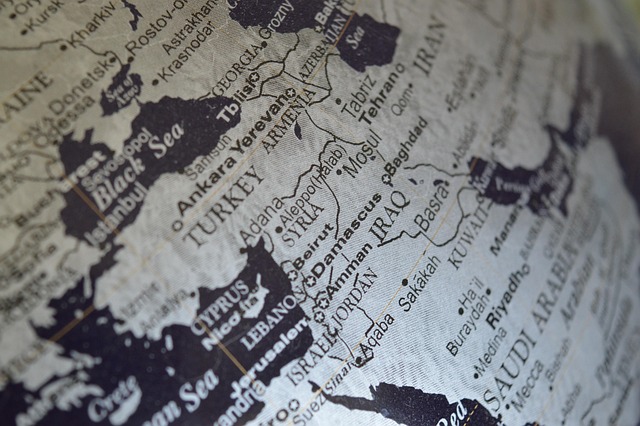
The Symbolic Meaning of the War In Lebanon
It is unfortunate that the mass media in the West has been more interested in giving us an account of the daily tragedies of Lebanese and Palestinian people than in giving us an objective and historical explanation of the war. Personally, I am not surprised by this deficiency since secularism is the dominant worldview of most of the people who work with the press, radio and television. They are not interested in researching the history of the area. It is so tiring to hear some of them repeating some worn out cliches about Lebanon and the Christians in Lebanon! When influential political leaders appear on our television screens, they seem to have forgotten the idealism which distinguishes our world from the Marxist world. In their approach to Lebanon, they seek to justify any involvement in its present chaotic situation only on the basis of “our national and vital interests.” Now since the Lebanese have no oil resources, are they not expendable? What “vital interests” can be found in that small republic on the eastern shores of the Mediterranean?
What are the facts? The Lebanese war cannot be understood apart from the broader context: the Middle East, its history , geography and religions. Since the early years of the 7th century, Middle East Christians have been living under Muslim rule, first Arab, then Turkish. On the whole, the Arabs were more tolerant in their relations with the Christians than the non–Arabs who succeeded them. During the 19th century, Christians were in the forefront of the movements for the revival of the Arabic language and culture . This led to the rise of Arab nationalism, a movement which sought to separate politics from religion or at least to make it possible for the Christians of the area to be accepted as full citizens after the hoped for demise of the Ottoman (Turkish) Empire. It appeared for a while, especially in Egypt, that at last Christian Arabs were about to achieve a great dream: of being accepted by the majority of their countrymen.
WWI’s Tragic Repercussions
For the Middle East Christians the tragic events of World War I were shattering. As a sympathetic Western historian put it: The awful events of the war were for the Christians of Syria, Mesopotamia, and Anatolia a purgatory from which they emerged broken and decimated, a tragic chapter in the history of suffering which today , more than fifty years later, remains an omnipresent memory even to those born long afterward.
For the Christians of Lebanon, and especially for the Maronites, that meant the absolute necessity of obtaining from the West the assurance that they would never come under the dominion of an Islamic government. This attitude was not followed by other Arab Christians. The Copts in Egypt, the Greek Orthodox and Protestants in Syria and Palestine, worked hard to see the end of British and French colonialism. But they always had in mind the goal ofan Arab nationalism which would bring into being some “secularized” form of an Arab state and nation . They dared to dream of the impossible: separation of “church” and state within the Arab world! It is important to observe that in the decades of the thirties and the forties, Arab Christians (and here I am not referring to their personal faith commitment, but as a distinct ethno-religious entity) were in the vanguard of propagating Western political ideologies with proper adaptations for local consumption. The father of the Socialist Ba‘ath Party, the dominant political movement in Hafedh Al-Assad’s Syria and Saddam Hussein’s Iraq, is a Syrian Greek Orthodox: Michel Aflaq!
The Rise of Militant Islam
All the dreams of the Christian Arabs have been shattered by the triumph of Ayatollah Khomeini in Iran and the resulting tidal wave of Islamic conservatism sweeping the Arab world from the Gulf to the Atlantic. Today, the majority of Arabs deny the possibility of a Christian being at the same time an Arab. In other words, true Arabs can only be Muslim Arabs! This recent and tragic development in the modern history of the Arab world cannot be dismissed. The Christians of Lebanon feel terribly ill at ease because of this new situation, and many of their fellow Christians in the rest of the Middle East share their apprehensions.
In fact, the rise of militant Islam (unfortunately dubbed by the secular media as Fundamentalist Islam) has sharpened the symbolic significance of Lebanon for all the 12 million Christians of the Middle East. What the shapers of our public opinions and the framers of our international policies ignore is the fact that the Christians of the Middle East have always been there. And while it is true that millions of them have emigrated to other lands seeking freedom of religion and opportunities for self-improvement, this does not happen to be the wish of all the Christians of the Arab world. Lebanon has always been to them the city of refuge. In ·this century alone thousands of persecuted Christians have found in Beirut or Tripoli or Zahle a place to make a new beginning. Lebanon has become the country of countless survivors of the Armenian holocaust, the unwanted Assyrians and Nestorians ofIraq, Arabic-speaking Christians like my family which fled the Turkish occupation of the Syrian province of Antioch in 1939 and initially, in 1948, of over 100,000 Palestinians fleeing from Galilee after their eviction by Israel.
Why a War in Lebanon?
The war in Lebanon has been total. It has destroyed large urban areas of Beirut, Tripoli, Sidon, Tyre and many other smaller towns and villages in Mount Lebanon. The material cost is in the billions of dollars. More tragically, the cost in human lives has been very high: over 100,000 killed and 500 000 wounded and/or forced to abandon their homes.
But how could this terrible tragedy happen in the “Switzerland” of the Middle East? The types of answers which have been given have been only partial ones: The continual existence of “war lords” among the Maronites and their rivals, the Druze. The unwillingness of the Christians to recognize the fact that the unwritten “covenant” of 1943 which favored the Christians in the presidency and the parliament is no longer being recognized by the various Muslim groups: Sunnis, Shi’ites as well as Druze. Nor should we forget the Palestinian factor and the unfortunate use of Lebanese territory to mount attacks on the Jewish state of Israel by the armed groups of the PLO.
In the final analysis, the Lebanese Christians‘ resort to arms since 1975 is a symbol of the determination of one Middle East Christian community not to allow itself to be re-submerged into the world of Islam, which is marching steadily on the road of radicalism. In an age when all types of minorities in the world are seeking acknowledgment and the right to self-determination, the Christians of Lebanon, who represent the secret aspirations of their fellow-Christians in the Middle East, are taking into their own hands the right to be at home in their own homeland. Since the end of the Second World War, every Arab who became persona non grata in his homeland found in Lebanon a new home which welcomed him and gave him the right to be free, whether he was Muslim or a Christian.
I perfectly understand the puzzlement which overtakes Christians upon hearing that Christians are fighting in Lebanon—as long as these Western Christians belong to traditionally pacifistic churches and communities. But I cannot comprehend why other Christians who have gone to war under the banners of their countries seem to deny the Lebanese the right to fight, and to fight in a war that has been purely defensive!
What Can Western Christians Do?
It is not enough to become immersed in the facts about the tragic situation in Lebanon. What must we do , we who live in the comfort and tranquility of the Western World?
First, we must seek to learn more about our forgotten brothers and sisters, the Christians of the Middle east. During the last ten years while visiting the countries of the area, I have often been asked by the Christians there to tell their tragic story to the Christians of the West.
Second, we must participate in the rebuilding and the rehabilitation of the urban and rural areas of Lebanon. It is an apostolic tradition for rich Christians to help poor Christians; this is a priority as we seek to help all types of poor people in the vast world.
Third, Lebanon urgently needs spiritual help. Christians and Muslims, Lebanese and Palestinians, all who live on Lebanese soil, need a word of healing, of forgiveness and reconciliation. And the only message which will accomplish all these things is the dynamic message of the Gospel, the Good News (the Injeel) of Jesus, the Messsiah, the Lord of history! In the aftermath of the 1860 massacres, the pioneer Protestant missionaries made available to the survivors who flocked to Beirut all types of help: material, medical and humanitarian. But above all, they distributed the newly translated Arabic Bible. A century and a quarter has passed, but the tragedies in Lebanon have continued to haunt the lives of its people. The church in the West is urged to use all available means: Christian presence, ministry of mercy , assistance to churches, radio and the printed page, to help the rebuilding of Lebanon, the land of refuge. And all these efforts would be in vain if we do not start on our knees , imploring the Father of all mercies to help the international community to find a just solution for the distressed and dispersed Palestinians, and to bless the Lebanese leaders in Geneva to find a new modus vivendi for all the people of Lebanon.
Suggested list of books which are helpful in our understanding of the Middle East. and its many problems.
Hitti, Philip K. Islam: A Way of Life. Chicago: Henry Regnery Co., 1970.
Lewis, Bernard. The Arabs in History. New York, NY: Harper and Bro., 1960.
Lewis, Bernard. The Middle East and the West. Bloomington, IN: Indiana University Press, 1964.
Hourani, Albert. Arab Thought in the Liberal Age: 1798–1939. New York, NY : Oxford University Press, 1970.
Grabill, Joseph L. Protestant Diplomacy and the Near East: Missionary Influence on American Policy 1810–1927.
Minneapolis, MN: University of Minnesota Press, 1971. Sykes, John. The Mountain Arabs –A Window on the Middle East. New York, NY: Chilton Book Co., 1968.
Betts, Robert Brenton. Christians in the Arab East. Atlanta: John Knox Press, 1978.
Bassam M. Madany is the minister of Arabic Broadcasting of the Christian Reformed Churches’ Back–to-God–Hour. He lives at South Holland, Illinois. This. article is reprinted with permission from the March 1984 issue of Urban Mission.