This organization and publication began 36 years ago announcing their devotion “to the exposition, defense and application of the Truth as set forth in God’s Word and summarized in the . . . Calvinistic” (Reformed and Presbyterian) creeds. Now, in a religious climate in which church commitments not only to what is Reformed, but even to what is definably Christian become increasingly uncertain, encouraging “catechism preaching” seemed to be one way to try to remedy that confusion. For that purpose we placed 4 different articles in our October issue. All concerned about the same thing, they raise the question about what is the best way to carry it out. I believe that it is desirable that we consider that question, not to provoke useless or divisive argument, but to try to make our practice more effective. Is it better to structure the sermon on a Bible text or to take the Catechism as a “text”?
Let’s first observe that, although our traditional organization of a sermon around a text has many obvious merits, the sermons found in the Bible are not always so organized around a single “text.” Considering the Biblical examples suggests that we hesitate to say that there is only one “right” way to structure a sermon.
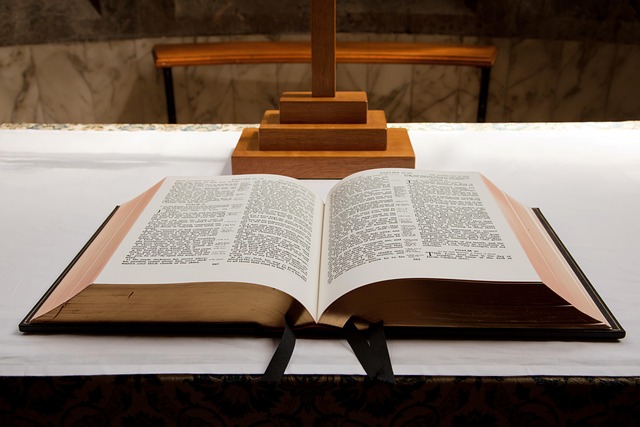
Regardless of how one may structure a sermon, we ought to be alert to the danger that by using the Catechism as though it were a text of the Bible, we inadvertently lead people back into the Roman Catholic error of placing church creeds and decisions beside (and, in effect, over) the Bible. The Catechism may be a very valuable help to Bible study, but it may not become a substitute for it! There are some indications that suggest that a faulty method of preaching doctrine as only our church tradition has helped to provoke the anti-traditional re action that is destroying the faith of those churches. If we don’t show and teach people to show from God’s Wo rd what we believe and why we must believe it, if we say as one old minister did when this was pointed out, “We don’t have to go to that trouble; we had professors who did it for us in seminary!” we are cutting the real ground out from under our faith and inviting the collapse that we are seeing throughout our churches. Our faith needs to be grounded on, “Thus saith the Lord!” Our Lord Himself constantly appealed to the Scriptures to ground His preaching, and the apostles did the same. Luther and the other Reformers found their faith in God’s Word and laboriously based their confessions upon it. We, like them, must hold, live and preach the same faith-and that for the same reasons. The only way one can be an effective missionary is to open the Bible and say to all regardless of their cultural history or diverse background, “This is what God says to you and me!” More than ever today, we must teach every member of our churches to be ready to do that. We must help them do that in growing “ecumenical” contacts with people of all kinds of other churches.
The Catechism bas been for centuries and still is a valuable summary and “tool” to help people see the structure in the Bible’s doctrine. But it is by no means perfect. Compare, for example, the two pages devoted to the at that time highly controversial questions about the Lord’s Supper with the mere three times with which it answers the question “What do you believe concerning the Holy Spirit?” The Bible obviously places more emphasis on the Holy Spirit and His work than that. Let’s try to make good use of the Catechism as an aid to systematically teach the Word of God but not blunder into making the catechism a substitute for it.
In our earlier seminary training, Samuel Volbeda gave valuable training on bow to prepare Biblical sermons—“Marry your text,” be said, “and don’t depart from it.” Louis Berkhof taught us to see the system of Biblical teaching, everything supported by exhaustive listing of proof texts, and his incomparable Systematic Theology continues to spread around the world in translations (though it is sometimes belittled among our unsystematic “theologians”). But for learning to begin with the Bible, and exhaustively show from it “the whole counsel of God,” we needed to turn to John Calvin’s Institutes and Commentaries and to the works of John Murray. More than ever in these times of confused opinions and crumbling beliefs, we need to learn, like those Reformed predecessors, to believe and build upon what God said. We must learn and teach our churches to learn to, like the “noble” people in Berea, “search the Scriptures daily” to see what is true (Acts 17:11, 12). That is the way the Lord bas built and builds His church.