


When we think of this subject, the words of Hebrews 12:1–3 come to mind: “Therefore since we are surrounded by such a great cloud of witnesses, let us throw off everything that hinders and the sin that so easily entangles, and let us run with perseverence the race marked out for us. Let us fix our eyes on Jesus, the author and perfector of our faith, who for the joy set before Him endured the cross, scorning its shame, and sat down at the right hand of the throne of God.”
The great cloud of witnesses refers to the heroes of faith listed in chapter 11. These witnesses surround us in our race that has been set before us.
Commentators question what “witnesses” here means. Some have suggested that these described in chapter 11 are spectators who watch us in our race. They line the course, and shout encouragement to us to keep on going. Although attractive, I think that this is wrong. While these people are witnesses, the idea of the saints in glory observing what goes on here on earth is quite outside Scripture. Rather they serve as witnesses in that they speak to and encourage us by the examples of their testimonies. They are not on-lookers, but they witness to us in the things they said and did. “By faith Abel offered God a better sacrifice than Cain did. By faith he was commended as a righteous man when God spoke well of his offering. And by faith he still speaks, even though he is dead.” They are speaking to us from the pages of the Scripture which describe their faith.
This witness ought to inspire us· in our Reformed witness for today. The witness that we must bring as a reformed people is precisely the same that was given by these witnesses whose lives and testimonies are recalled in chapter 11. Let’s consider a Reformed Witness for Today using the examples of the heroes of faith for our encouragement and our help.
The Nature of the Witness
The nature of our witness as it was the nature of that of the heroes in Hebrews 11, is faith. Faith in Jesus Christ, faith that is based on the Word of Almighty God, faith that enables one fo persevere; that faith is at the heart of our Reformed witness today. Look, for example at the last part of Hebrews 10. We read, “So do not throw away your confidence; it will be richly rewarded. You need to persevere so that when you have done the will of God, you will receive what he has promised. For in just a little while, He who is coming will come and will not delay. But my righteous one will live by faith. And if he shrinks back, I will not be pleased with him. But we are not of those who shrink back and are destroyed , but of those who believe and are saved.” Then follows the great eleventh chapter of the book of Hebrews dealing with faith.
Why is faith absolutely necessary for a reformed witness today? The reason is that faith by definition is in the Word of God. Scriptural faith, biblical faith is based on the Word of God. As such, faith, by definition is belief in what is not seen, or as Hebrews 11:1 says, “Faith is being sure of what we hope for and certain of what we do not see.” But how can faith be sure of what we hope for, and certain of what we do not see? There is only one possible answer. That answer is: Faith believes that the God who has spoken is true. Faith believes that the things God has revealed to us are true even though we have not seen them, nor are they yet fulfilled for us. Faith believes because God has told us. It is as simple as that.
Our Reformed faith is faith in the Word of God. This is the heart of our confessions. This is the foundation of our salvation. Faith is unique in all the virtues that the Christian must exercise because it is based exclusively on the Word of God. Apart from that Word, faith cannot exist. Apart from the Word, faith is just nonsense merely a “following after wind,” as the Preacher in the book of Ecclesiastes says. Faith is at the essence of the Reformed witness because it is based upon the infallible and inerrant Word of God.
Nowhere else is this great truth so demonstrated and crucial for us today as in the doctrine of creation. It is extremely important and of great interest to us today that Hebrews 11 begins its treatise on the importance of faith with a statement on creation. In vs. 3 we read, “By faith we understand that the universe was formed at God’s command, so that what is seen was not made out of what was visible.” This is one of the most vital texts in all of Scripture regarding the doctrine of creation. This text is to be seen in the light of the Bible’s account of creation in Genesis 1 and 2. The first thing this text tells us is that it is by faith that we understand. It is interesting and quite surprising that we are listed along side the heroes of faith in the eleventh chapter. Throughout this chapter the author speaks of these heroes of faith: Enoch, Noah, Abraham—all lived and died by faith. But at the head of the list you and I are named. “By faith we understand.” That says that the basis for our faith is precisely the same as that of all the heroes of faith that follow. That basis is the Word of Almighty God. The text is speaking of our faith that believes that God created the universe. On what does that faith rest? What is the basis for it? Of course, it is the same basis that all the others in this chapter rested upon: namely, the Word of God. However, there is a difference. Their faith was based on the spoken Word of God. Ours is based on the written Word of God. That written word that Hebrews is referring to is of course the text of Genesis 1 and 2. For that is our only basis for acknowledging that God created the universe. When Hebrews says, “By faith we understand that the universe was formed at God’s command,” the faith he is talking about is faith based upon the Word of God in Genesis.
The Content of the Witness
A second thing that Hebrews 11:3 says about our faith that God created the universe is that we understand that the universe was formed at God’s command. The word “formed” refers to the method of creation. Notice that the Bible says that God formed the universe at His command. What are we to understand by the “command” of God? The word that is trans lated “command” is different from the usual term used for “word.” We are familiar with the term “logos” which is translated “word.” We think of John’s description of Jesus as the Word of God in John 1:1. That is not the term used in Hebrews 11:3. Rather, the Greek word is “rhema” which can also be translated “word.” Here in the NTV it is translated “command.” The emphasis in this term “rhema” is on the spoken Word of God. One of the best Greek-English lexicons says, “This word refers to what is said, a word, saying, expression, an order, a direction.” This is especially important here in Hebrews 11:3. What Hebrews is saying and emphasizing h ere is not first of all, that God created the universe through Jesus Christ the Logos. This fact, of courses, is true. It is taught elsewhere in Scripture as, for example, in John 1:3 where John says, “The Word was God. All things were made by Him.” John speaks of the Lord Jesus Christ, the Word. But what Hebrews 11:3 is saying is that God formed the worlds, the universe by His spoken word. This refers then to the “how” of creation, not just to the “what” of creation. In answer then to the question, “How did God form or create the universe?” the Bible says, “By faith we understand that the universe was formed at God’s command,” that is, This is precisely what Genesis 1 and 2 says. There we read, “and God SAID.” As Psalm 33:6 says, “God spoke and it was so; He commanded and it stood fast.” This is an absolutely crucial point that we must understand. The Bible here in Hebrews 11 is corroborating exactly what Genesis 1 and 2 tell us. Genesis 1 and 2 speak of the spoken word of God calling into existence the universe, and Hebrews 11:3 speaks of the very same thing. If one says that Genesis 1 and 2 are “primeval history,” that they do not describe real events, then what about Hebrews 11? Does Hebrews 11, with reference to our faith of today, refer to non-historical things as well? What then happens to our faith? If the events described in Genesis 1 and 2 are not historical, and if they are the basis for our faith, what happens to our faith? It crumbles! There no longer remains a foundation for our Reformed Faith today. Faith in the whole Bible stands or falls together.
A third statement in Hebrews 11:3 strikes at the heart of the theory of evolution. Hebrews 11:3 says, “By faith we understand that the universe was formed at God’s command SO THAT WHAT IS SEEN WAS NOT MADE OUT OF WHAT WAS VISIBLE.” This statement says that what God created, He created out of nothing. “What is seen was not made out of what was visible.” The theory of evolution teaches that every thing came from pre-existent forms. Following the “Big-Bang” everything evolved from what was already visible. Eventually, all evolved from pre-existent material until after billions of years, biological life evolved, and then millions of years later, human life. This evolutionary theory is absolutely and diametrically opposed to what the Bible says. Here we read, “So that what is seen was not made out of what is visible.” Nothing could be clearer from this statement. It is almost as if the Holy Spirit intended this statement to be a broadside directed at the theory of evolution that is so prominent today, even in our own circles. If you or I, as creationists, were asked to write a one-sentence denial of the theory of evolution, we could not come up with a more succinct and.clear dismissal of the theory than this brief word. There simply is no room for evolution according to the Word of God. It places before us an either—or declaration which some of our proponents of theistic—evolution people hate with a passion. This text puts it as clearly as can be. Ours is either a belief that God formed the universe by His command, or it is the belief that what we see came about from what is visible.
Hebrews 11:3 states “By faith we understand that the universe was formed at God’s command.” It is not by empirical study that we understand. Even the evolutionist’s theory is not based on empirical study. He was not there to see what happened. Our faith is based on the word of the only One who was there, even Almighty God. He told us what happened and we must believe that what He said is true.
The Opposition to the Witness
A Reformed witness of today and the Hebrews 12 witnesses both share the same opposition. The biblical witnesses whose lives and testimonies still testify to us today, expressed their faith in the face of great opposition. We must do the same.
Consider the testimony of the “great cloud of witnesses” in the eleventh chapter of Hebrews. We read in verses 23–26 of the faith of Moses’ parents, and then of the faith of Moses himself. The Bible says, “By faith Moses’ parents hid him for three months after he was born, because they saw he was no ordinary child, and they were not afraid of the king’s edict. By faith Moses, when he had grown up, refused to be known as the son of Pharaoh’s daughter. He chose to be mistreated along with the people of God rather than to enjoy the pleasures of sin for a short time. He regarded disgrace for the sake of Christ as of greater value than the treasures of Egypt, because he was looking ahead to his reward. By faith he left Egypt, not fearing the king’s anger; he persevered because he saw Him who is invisible.”
The testimony and witness of these people was given in the midst of great opposition. They believed in the face of great danger. It was not an easy thing to act on the basis of conviction and faith. The key to the faith and action of these people is seen in the words, “Because he saw Him who is invisible.” This clearly refers to God Himself. Moses saw Him who is invisible. How could he see what is invisible? The answer: “By faith.” Faith makes what cannot be seen real. Faith in the Lord and in His Word gave Moses the courage to do what he did in the face of great opposition.
In verses 32–40 the author speaks of the many saints who through faith accomplished great things, or who through faith died gloriously. In the midst of opposition they lived and died by faith. God sustained Moses and all of the saints by His Word. Their faith enabled them to make a testimony for our encouragement today.
In chapter 12, Hebrews addresses us who are also living in the midst of opposition. But as Hebrews 12:4 says, “In your struggle against sin, you have not yet resisted to the point of shedding your blood.” That is true of us today. Yet we have grown weary, and as verse 5 says, “We have forgotten the Word of encouragement that addresses us as sons.” So in our Reformed witness for today, we must remember the witnesses who throughout the history of the Church, both in the Old and New Testaments, exercised their faith in the face of great opposition. Let us resolve to continue in that line of courageous men and women who lived and died by faith in the Word of God and in Almighty God Himself. Our failure to act according to our faith and our convictions is often because of our unwillingness to suffer. We do not want to be outside the majority opinion in our churches. We do not want to be called naive when we hold to the truth of the Word of God. We want to be accepted by the leaders in the educational world today. Our self-interest has gotten in the way of our faith. The bottom line is that we would rather be accepted by the world than to suffer ill treatment with the people of God.
The Reward of the Witness
The Reformed Witness for today is based on faith in the Lord Jesus Christ, which, in turn, is founded upon the Word of God in the Scriptures. The example of this faith is our belief in the doctrine of creation as stated in Hebrews 11:3, “By faith we understand that the universe was formed at God’s command.” We have seen that the faith and testimony of this great cloud of witnesses was exercised in the face of great opposition. Now we must see that this testimony was greatly rewarded. First, it resulted in the declaration by God that those who lived and died by faith were righteous. This testimony is made regarding Able and Enoch. Of Abel we read, “By faith he was commended as a righteous man, when God spoke well of his offering.” And of Enoch we read, “For before he was taken, he was commended as one who pleased God.” A second and equally important result of. their testimony is the blessing of the Lord. There is no question but that Hebrews 11 states that the way to true happiness, to God’s blessing, is the way of faithful obedience. Every person listed in this great chapter received God’s blessing by way of faith and the obedience that followed.
We must remember this in our reformed witness today. We are impressed by immediate results. We want to see the outcome right now. But the very essence of faith is that it waits in hope for the result that God has promised. We must live in faith and hope in our Reformed witness. In our battles against the forces that seek to break down the Word of God, and the confessions of the Christian Reformed Church, we must not look for an easy or immediate victory. Indeed, as the author of Hebrews says. many of those in the eleventh chapter died martyr deaths rather than receive release from prison through compromise. Their victory was a better resurrection. So it may be for us. We earnestly want to see our Christian Reformed Church reformed and restored to its original strength and purity. Perhaps that is not to be. Many of our number are convinced that this will never happen. Nevertheless, the better thing awaits us if we are willing to remain true to the Word of God. The blessing of God awaits those who persevere in their faith and the testimony of the Scriptures which alone is the basis for our faith and life.
The Encouragement of the Witness
We have been looking at the Reformed Witness for Today in the light of the great “cloud of witnesses” mentioned in Hebrews 12 and listed in Hebrews 11. The faith that those men and women exercised is the same faith that we must have, especially as described in Hebrews 11:3 as the faith in the doctrine of creation according to the Word of God.
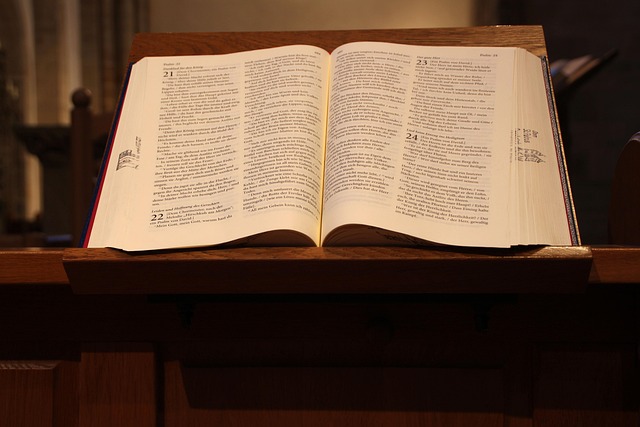
Now look at the incentive, the encouragement to the faith that is to be the basis for our Reformed witness. That incentive or encouragement is stated in Hebrews 12:2, “Let us fix our eyes on Jesus, the author and perfecter of our faith, who for the joy set before him endured the cross, scorning its shame, and sat down at the right hand of the throne of God. Consider him who endured such opposition from sinful men, so that you will not grow weary and lose heart.”
Notice how the author to the Hebrews ties all that he has been saying in chapter 11 with this great encouragement: He tells us that the faith that is the basis for our Reformed witness originates in Jesus Christ. He is the author and the perfecter of our faith. In our witness, we must fix our eyes upon Jesus. He is the author of our faith and, because He is the perfecter of our faith, He will bring our faith to sight. Jesus is the One who brings us from walking by faith to walking by sight. In order to make that great step, we must keep our eyes upon Him. We must follow Jesus.
Jesus gives us a personal incentive when He sets before us the fact of His suffering. Just as the heroes of faith exercised their faith in the face of opposition, so does Jesus Christ. It was “for the joy set before him,” that He “endured the cross, scorning its shame.” The book of Hebrews holds up our great Leader, the Lord Jesus Christ, and urges us not to grow weary and lose heart in our witness. It says, “Look at Jesus. Keep your eyes fixed on Him.” When you do, you will find that Jesus suffered far greater opposition than we will ever face.
The Reformed Witness for today is a life and testimony of faith in the Word of God. Our discussion must always come back to this. The Word of God, the written Bible, is the bottom line in every issue that we face in the church today. It was the basis for the faith of the heroes of faith, and it is still the basis for our faith and witness today. Every deviation from doctrine in the history of the Christian Reformed Church has resulted from a failure to abide by the Word of God. Likewise, every real effort to reform the church has always been founded on a return to the Word of God. It is not enough for us to claim to take the Word of God seriously. We must show that claim by our testimony, our witness, our life. It is our fervent hope and prayer that God will restore our denomination to a faith in the Word of God we have seen depicted in Hebrews 11. It is our fervent hope and prayer that with our eyes upon Jesus, we may “run with perseverence the race marked out for us.”
Henry Vanden Heuvel is the pastor of the Bethel C.R. church at Zeeland, Michigan. This address was presented at the conference of concerned at South Holland, Illinois on April 28, 1987.