


The success of any society, organization or movement depends on participating members. That is why we hear so much about this today. In our present time with its varied interests calling for, even demanding, our support and attention it becomes the more difficult to be a meaningful participating member and we are compelled to choose between what really is worthy or not so worthy of our participating support
Some prefer to use the word “involvement.” That these words are not the same should be noted. They are not synonyms. Involvement refers more to our mind and emotions, participation more to our actions. It is indeed possible to get involved in a movement and not really participate in it. Or we can be participating in a movement and not be really involved in it. I suspect that for many involvement means both, that is, that one is both fully taken up in a movement as to mind and emotions and therefore also zealously participating. Surely that is so in most instances. For that reason we hear much of “getting involved.”
The importance of this is not easily over-emphasized. That is true especially when we consider church membership. Participation is the essence of the Church of Jesus Christ. We include this clearly and beautifully in our creeds. As a church we confess that the Church is “the communion of the saints.” Of that communion we confess that “since we are partakers of Christ and all His treasures and gifts every one must know himself bound to employ his gifts readily and cheerfully for the advantage and salvation of the other members” (H.C. Answer 55). And as a response to this, every believer says that “I am, and forever shall remain, a living member thereof” (H.C. Answer 54). Undoubtedly living members are participating members, and also fully involved members.
A great deal of attention is currently given to the matter of participation by church members. There is reason for this. It is evident that there is a growing disinterest in church activities all along the line. church officers are deeply concerned. That is why much work is made of trying to get some spark back into congregational life. Attention is also directed to the question why there is this growing apathy and listlessness. The conclusion that many are reaching is that we find ourselves in this predicament because we refuse to be a changing church. A living church, it is averred, is a changing church in a changing society. Hence, if we want to again be a living church we must begin changing, right? Perhaps completely wrong! Let us consider this more closely.
In this matter of seeking to change the church considerable attention is given to liturgy. In that we are experiencing the most changes. This is strongly opposed by some, which in itself proves nothing. Custom easily becomes law. Just the same, it is important to listen to objections, especially when they come from the older members of the church. The question we must always ask is whether a change is good and likely to bring more life to the church, or whether it will work harm, or even be sfestru~tive to congregational life.
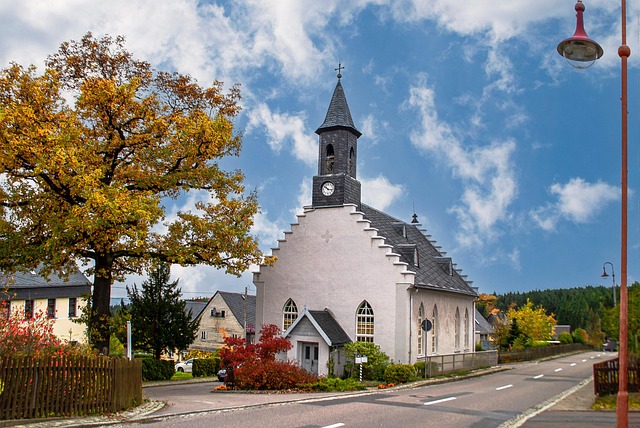
In order to get a proper answer to such questions, we must first ask another question, “What is a worship service?” That will determine what is suited to, and what we should be doing in, our worship services. We may posit the following: 1. None other than God calls His people to gather for worship through His ordained office bearers. He not only promises to be present but also promises to be present with His blessings. 2. Since a worship service is such a meeting with our God and Father in Christ Jesus we certainly must attend in t he right spirit. Every member should be filled with a sense of reverence and awe to enter into such a fellowship with the living God. No wonder Scripture calls us to, “Guard your steps when you go to the house of God” (Eccl. 5:1). Deep reverence ought to characterize every part of the services. 3. Worship services comprise a meeting with our Covenant God. He calls together households, covenant families, if you will, into this convenantal fellowship. Every family, and especially the parents, ought to be deeply aware of this wonderful fact. They should prepare their children to enter into this special and glorious fellowship. 4. Central to each worship service is the sermon, God addressing His people, through the ministers (stars in Christ’s hand–Rev. 1:16). That requires on the part of the minister careful and prayerful preparation as he seeks to proclaim God’s Word, and on the part of the congregation a readiness to hear what the Lord says to His people through His servant. And surely every minister needs the prayers of the congregation. 5. The central purpose of the worship services is to prepare the people of God to promote God’s Kingdom on earth, to resist and overcome the forces of evil, and to prepare for life everlasting. It is for this reason that the book of Hebrews stresses the importance of faithful church attendance when it says, “and the more as you see the Day approaching” (Hebrews 10:24).
Our forefathers, champions of the historic Christian faith, were moved by this concept of corporate worship. They sought to bring worship to the high plane of fitting reverence and awe in fellowship with the Living God. That they attained a high degree of success in this cannot be denied. The liturgies they carefully worked out were suited to evoke such a response on the part of the worshippers. They stressed the importance of families attending as a unit, and every member of that family participating fully to the extent that his age enabled him to do so. And for that reason it was quite common among many families to have what was known as a Saturday evening preparation. That not only readied young and old for worship but was certainly reflected in the services on Sunday. God richly blessed these endeavors.
Whether our forefathers reached the pinnacle of success liturgically one can question. The question is rather important whether we must improve on what has been handed down to us, or ignore the past and strike out on a new path. It seems to me that what is happening in our churches today is a total dismantling of all our forefathers sought to establish. That may not be bad if the new is an improvement, but it is regarding precisely that, that many have misgivings. What we have in many of the new liturgies is not a deepening of reverence in God”s House but rather a cheapening, or worse, a destroying of reverence in God’s House. Surely this is not an indifferent matter; it is a very serious and disturbing matter.
Some of the changes being made today are radical. Undoubtedly the idea is to get more of the congregation involved. Accordingly, we introduce prayer requests, song-requests, children’s songs, many responsive readings, even a miniature Sunday School for the younger children in front of the church generally during. the morning service. Many other innovations are being added almost at will.
Having experienced these changes convince me the more that we are going the wrong way. Most of the prayer requests that come up in such services rightly belong either to the individual person or family. They put the minister on the spot. He can hardly reject any that come. He asked for such responses. No consistory should permit such requests in a service.
Similarly, song requests should not be allowed. A church service is not the place for the favourite songs of either a minister or congregation. Every minister ought carefully to select songs that will enable the congregation to respond fittingly and meaningfully to the message from God’s Word. Hymn sings are the right place for song requests.
The disruptive practice of Sunday School in the church service is practiced by very few churches. Itgoes under the name of “A Word for the Children,” and afterward they leave for regular Sunday School classes. Many churches have children attending Sunday School during the morning service. This is extended to the ages of six to nine years in some congregations. To me such practices constitute a grave error, the consequences of which will seriously damage the concept of corporate worship. By this we are saying that children really do not belong to the congregation and that their instructors, since they are evidently doing an important work, need not listen to the proclamation of the Word or share in the blessings God is pleased to confer on His people at worship.
That children must be taught at an early age by the church is important. That Sunday School can serve as such a means, few will question. But that they leave a church service for this is definitely wrong. It is a violation of God’s clear call for households to appear before Him. And it is questioning the blessings God confers, also upon the lambs of the flock while at worship. It also questions the Holy Spirit’s ability to work in the hearts and minds of the little ones. It seems to me that I would not allow my children to leave a worship service for any reason. God wants them there. He will also bless them there. It is the duty of parents to instruct their children regarding the importance of corporate worship and their place in it. Then attending divine services we will be amazed at how children, through the Holy Spirit’s mysterious and marvelous work, learn to sing the songs of Zion, and come to appreciate the beauty and joy of God’s people at worship.
It is strange reasoning that we want to have the children participate in the service, to be recognized in it, and then send them out. Children are even asked to come forward to witness baptism. This disruptive practice distracts from the attention the congregation should give to baptism and teaches the children nothing. Surely this is not the place of such instruction, if that is indeed the intention. Parents are to explain to children the meaningfulness of Baptism. That is what they have promised to do.
Much more could be added concerning our present attempts to get all church members involved. Because some members do special things, or more members take a part in a worship service is no guarantee whatsoever of fuller participation. What assures participation is that all members come to God’s House prepared to worship. And in that worship we should be fully united, prepared unitedly to sing praise to God, give to promote His Kingdom on earth, lift up prayers to God and listen to His Word. Our practices must develop that blessed unity in full participation. Toward that goal we must work in that participating unity we must press forward.
Note: Cecil Tuininga is a retired Christian Reformed minister in Edmonton, Alberta, Canada.