


Needed Reform
In our classes on Church History the late Prof. D.H. Kromminga urged that the most painful problem facing God’s people today is “the brokenness of the church.” Its oneness in her Lord is being torn to sh reds both from without and from within. And nowhere is that seen so plainly as on this continent. While Europe becomes progressively neo-pagan, in our lands we still find much of the “form of godliness” but far too little of its life–transforming “power.”
Sorely needed everywhere, also in the Reformed churches, is a revival of true faith.
Only the Holy Spirit produces this, when He refreshes the church’s life as streams in the desert and springs in a dry and thirsty land. For this, we should constantly pray, lest we wither and die. At the same time, we are called to labor humbly and patiently. Although it is the Son of God who “gathers, defends, and preserves for Himself. . . a church chosen to everlasting life,” 1 in this surprising and gladdening work He will employ a faithful people. No one who confesses His name is absolved from this high calling.
All truly Reformed believers acknowledge that a church which knows itself to be Reformed continually seeks to reform itself. Any notion that we have arrived—in doctrine or devotion or dedication to duty—is of the devil. Ours should be the prayer, “Lord, take us and our churches as we are and make us what we should be.”
Today every church in Christendom is passing through a crisis. Ours are swift-moving days. While in our times people within (as well as outside of) the churches have either lost chart and compass or carelessly tossed these aside, some are also experiencing a springtime of renewal and reformation.
All are aware of radical changes within the Roman Catholic Church, producing much disturbance and distress. Not a few have deliberately turned away from Scripture and its traditions, to the dismay of the pope. But others are rediscovering the Word of God and learning to seek the Lord Jesus Christ as the all-sufficient Savior.
Also Protestant churches have been and are being upset. The Lutheran Church, Missouri Synod, after some decades of debate and dissension have purged themselves to a large degree but not without painful estrangements. Also the Seventh Day Adventists (leaving aside the question whether this is “church” or “sect”) are embroiled in contentions as to what is the pure Gospel.
Does it surprise you, then, that also the Christian Reformed Church and its membership are in a crisis?
A Crisis
That word, when biblically understood, needs to frighten no one. It concerns all of life, whether individual or communal or even and especially ecclesiastical, before the face of our God. Crisis does not consist primarily in strange, shocking, inexplicable external circumstances, much as these often accompany a crisis. It is the act of judging, (used for the human as well as the divine) on the basis of discernment.2 It involves self–understanding, which for believers means the deep awareness of living in all life’s relationships before the face of God. And that process of self–evaluation, also by a church, looks to the judgement (krima) of the Lord who as Judge either approves or disapproves. Of this Peter writes, “And if judgment begins at the house of the Lord, where shall the sinner and unrighteous appear?”3
This is serious business.
A Crisis
That word , when biblically understood, needs to frighten no one. It concerns all o f life, whether individual or communal or even and especially ecclesiastical, before the face of our God. Crisis does not consist primarily in strange, shocking, inexplicable external circumstances, much as these often accompany a crisis. It is the act ofjudging, (u sed for the human as well as the divine) on the basis ofdiscernment.2 It involves self–understanding, which for believers means the deep awareness of living in all life’s relationships before the face of God. And that process of self–evaluation, also by a church, looks to the judgement (krima) of the Lord who as Judge e ither approves or disapproves. Of this Peter writes, “And if judgment begins at the house of the Lord, where shall the sinne r and unrighteous appear?”3
This is serious business.
Neither we nor our churches exist for ourselves. We belong to Christ by his appointment. With blazing eyes and burnished feet He walks also among those candlesticks which are called Christian Reformed (Revelation 2, 3). If and when He weighs to find us wanting, He calJs us to repentance demonstrated by reformation in doctrine and duty. If and when we refuse to listen, He will remove the light. And when that happens, how great will be the darkness, which produces distress and finally death!
Is this biblical warning unwarranted?
Have we as individuals, and especially as consistories and congregations and synods, been so faithful to Him , that no blemish appears among us? Or have we been crying ”Peace, peace,” when there was no true peace? What about the party-spirit which seems to swell increasingly with the years? What about the suspicions which destroy the spirit of Christian brotherhood? What about compromises with the world in everyday living? What about pressures to change the Church Order, by which we have all pledged to abide? What about the ignoring and contradicting of the creeds which we have confessed to be in full agreement with God’s Word? What about true and honest appropriation of the Scriptures as the clear revelation of God which alone make us wise unto salvation? What about our personal loyalty to and love for the God whose we are and whom we claim to serve? Is all really so much in order, that a call to repentance which leads to a reformation within the churches is out of place? Asking these will elicit the right answer in the mind and heart of every believer.
Christ indeed is engaged also among us in gathering a people for His own possession. In that work He breaks down all that which is contrary to His sovereign will. He searches the secrets of every heart. He destroys pride of intellect, cleverness of strategy, sleepy contentment with who we are and what we have been doing. His honor is at stake. The glory of His Gospel of sovereign grace is involved. This may never be dimmed by our concessions and compromises for the sake of a false peace.
The church which He builds is not some idealistic projection hidden far beyond the realities of this willful and wandering world. He is building His church here and now. He makes it visible before men, angels and devils. He not only redeems; He also renews in mind and heart and soul to make His people “living stones . . . built into a spiritual house, to be a holy priesthood, to offer spiritual sacrifices acceptable to God through Jesus Christ.”4 Here the difference between faith and unbelief, between church and world, between life and death become more sharply etched. And woven deeply into the fabric of such a church is the pattern of ongoing reformation.
Granted that such a reformation, as Christ’s command and our response, characterizes the true church, how should this manifest itself?
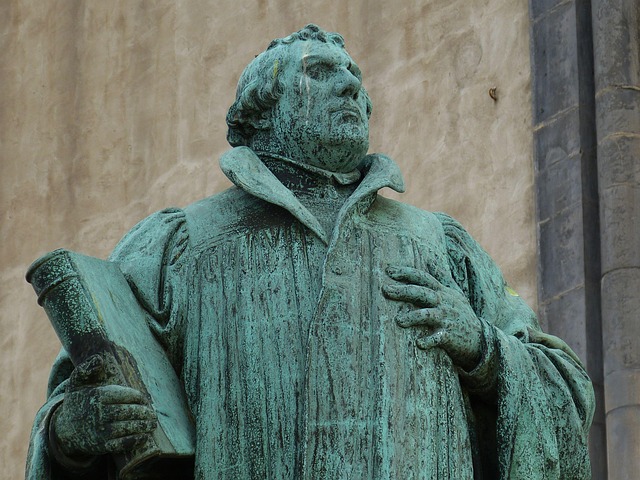
Kuyper on Reformation
For an answer we turn, to re learn some old lessons, to a book published 100 years ago. In the year 1883, faced with the deep “crisis” prevailing in the Reformed Church (Hervormd) in the Netherlands, Dr. Abraham Kuyper wrote his Tractaat van de reformatie der kerken.5 The occasion was indeed appropriate; that year marking the 400th anniversary of Luther’s birth. Addressing the church and its membership , he ou tlined the formation, the deformation, and the reformation of Christ’s church on earth . The need for such a treatise was immediately apparent to many. Since 18 16 a synodical hierarchy throttled all efforts at reform. At its hands the Secessionists of 1834 had suffered much. By the 1850’s and 1860’s, to maintain peace at any price, it had worked hand-i n-glove with increasing corruptions in doctrine and conduct. Modernism became more outspoken; mysticism of a false kind exerted its deadening influence. In many places the Word of life was no longer heard. Multitudes became totally estranged from the Gospel, to pursue the mirages of evolutionism, humanism and socialism. Protests had long gone unheeded or were summarily dismissed as not in good form. And weeping over “the breaches in Zion,” Kuyper wrote this tract.
Once again he called all God’s people to become truly church. His aim was not, as his critics claimed, to break the unity of the congregations. Rather, he with thousands who read, remembered and responded in faith longed to heal the church from within. These people were largely forced out of the church of their forefathers by the illegal and unbiblical acts of ecclesiastical power-brokers. Thus his writing did act as a “catalyst.” But the blame for the split rests with those who refused to face the issues, neglected the call for reformation, and placed ecclesiastical regulations above the Bible.
The struggle of Kuyper and his fellow-believers appealed to the authority of Scripture as “the only rule for faith and life” and, in submission to that Word , to the integrity of the church as a confessional and confessing people of God.
Imperfections, indeed, stain also this work of Kuyper. Here we find words, phrases and sentences which fail to do full justice to biblical teaching. Often these rooted in scholastic, speculative and philosophical notions from which he, child of his times and still conditioned by some of his early training, did not wholly liberate himself. But who dare deny the blessings which accrued to multitudes of believers because of the heroic testimony of this man and his many colleagues?
Hundreds of congregations were again reformed according to the Word.
Multitudes came to a true and sav ing faith by means of vigorous evangelistic and congregational preaching of God’s rich grace in Christ. Christian schools, institutions of mercy, organizations for social and political action flourished as never before in the Netherlands. And far beyond the confines of that little land Reformed churches profited for decades from the high level ofChristian scholarship produced within that new fellowship of churches. To that reformatory movement as well as to the Secession of 1834 the Christian Reformed Church in our nations owes, under God, a spiritual debt not easily discharged.
The Current Decline
After decades the Netherlands church , faced with the old enemies of the Gospel in new guise, increasingly fell short of its high calling to be always reforming itself in heart and life. The sad results now stare in our eyes, too.
Complacency replaced early zeal for the Reformed faith. People were satisfied with the status-quo. Call s for a deeper commitment to the Word went unheeded. A party-spirit sprang up. A schism was engineered, breaking faith with 1892 and the pastoral decisions of 1905.6 Faithful officeholders were disciplined; faithful congregations disfellowshipped.
And since that time the spiritual unity which those in ecclesiastical power claimed they were maintaining has suffered almost irreparable ravages.
Soon compromise with evolutionistic theories were tolerated. Next came a new approach in much of the missionary calling. Those churches compromised themselves by uniting with the World Council of Churches. That , in turn, disturbed the harmony within the Reformed Ecumenical Synod which they had helped organize in 1946. Now creedal positions we re either openly or subtly attacked . Conflicts about the origin of mankind , the factual reality of our first parents, and the substitutionary atonement of our blessed Lord, among others, were never satisfactorily settled. Along with this came the ordination of women to ecclesiastical office, defended by a “new” hermeneutic which the leaders had formerly repudiated. Homosexual practice was at least tolerated, only later to be defended by many. And to crown all these compromises a recent synod officially endorsed a defective view of Scripture in God met ons.
Meanwhile tens of thousands kept on sleeping. They thought the traditions of 1834, 1886, and 1892 would simply perpetuate themselves.
Others, more alert, were afraid to protest publicly, lest they lose popularity. At all costs the external and organizational unity had to be maintained. Thank God, within those churches there are still some who seek to heal the deep wounds of the churches. But only time will tell whether a Reformed church which has departed so far from its roots can still be revived and reformed.
The light which once shone so clearly has long since retreated behind dark and ominous clouds. The gold which once was bright is now tragically dimmed.
This story tells all of us what can happen to any Reformed church which refuses to patiently, persistently and prayerfully engage in ongoing church reformation. Itcan also happen to the Christian Reformed Church.
A church which loses all flexibility soon finds itself incapable of responding with the Gospel to the changing scenes in history. It becomes rigid, insulating and isolating from life. Instead of being a confessional and confessing itself church, it turns out to be “confessionalistic.” About this more will have to be said some time. Such a church is sterile. But as soon as it neglects its heritage, compromise with worldly learning and practice corrupts its soul. Attempting to win popularity, it practices deceit. The fragrance of the Gospel turns into a stench. It dooms itself to that deformation which results in becoming a “false” church and a “synagogue of Satan.”7
Also our churches, so long as they exist, find themselves in a crisis–situation.
Today, more than ever, this needs to be discerned. Especially now the message of the ancient prophet must resound: “Woe to those who are at ease in Zion.”8
Ours is a season which calls for openness , and the honesty which moves to true humility before the face of our God when dealing with each other as well as with those on the outside. Always we are to speak the truth in love for Christ’s sake. This alone will strengthen, instead of break, a fruitful fellowship with all who sincerely confess the Christ of the Scriptures.
What Kind of Reform?
Not every call for reformation meets with God’s approval. Also here Satan seeks to destroy the work of the Lord in gathering, defending, and preserving a people for His own possession. What we might call reformation may soon become an abomination in the eyes of God. As decisive for spiritual fruitfulness as the what is the how of church revival and reformation.
Let me quote from an article written many years ago in the Geldersche Kerkbode by the Rev. Dr. Willem Vanden Bergh.
This brother has long been esteemed as “the conscience of the Do lean tie,” a reformational movement in the Netherlands during the 1880’s. Although that situation, which produced a rupture in the churches which many had long sought to heal, differs from ours today, the words of Vanden Bergh have not lost their (spiritual) relevance.
“There is false and true conversion, hypocritical and upright faith, and so too there is false and true reformation. Satan imitates all that is good. Thus he gladly sees a Church ‘reformed’ as long as this is not by the Holy Spirit and according to God’s Word.
Wherein does this difference appear?
1. There is a reformation which springs from opposition to the unrighteousness of others—and another which arises out of sorrow for our own guilt in the existence of that unrighteousness. 2. There is a reformation which occurs because of spiritual self-centeredness, in order to obtain pure preaching easily and cheaply—and a true reformation which owes its origin to the desire to confess Jesus as Lord and Head of the church and therefore rejects all that is in conflict with His Word. 3. There is a reformation which aims at a gathering of like-minded persons and proudly positions itself in opposition to those who ‘do not go along’—but also a better reformation which springs from painful sorrow because of the neglect of the congregation and breaks with the Synodical Organization in order to seek out the wayward and broken with greater freedom and zeal. 4. There is a reformation which with a shameful blush on its cheeks quietly and purposefully erects church buildings in places where this was long neglected but there is also an inferior kind of reformation which proceeds with too much haste and too little sacrifice so that its place and character conflict with the development of reformation or in practice again repudiate a uniting with others who are Reformed. 5. There is a reformation which begins and ends with casting off the ‘Synodical yoke’ and with nominating a consistory but leaves all the existing idols, breaches and barriers untouched—but also a reformation, conceived of more deeply and broadly which permeates family, work and heart, or where this has already begun manifests ‘a small beginning of holy obedience’ in all its parts. 6. There is a reformation arising from carnal zeal, joined to legalistic appearances and self-willed religion , which works havoc with spiritual life—but also another reformation which works by the power of Jesus’ blood and through the Holy Spirit, needs a Mediator no less than a King, and produces spiritual awakening.“O reader, which marks does the church to which you belong, whether it is called Reformed Church (Hervormd) or Reformed Churches (Gereformeerd), manifest? And if you see faults, break with the sins but seek to heal the consequences. And if you live in a truly reformed church, are you yourself also renewed, converted?”9
Christ according to His unbreakable promise is also today busy with His church-gathering work.
He gathers that which truly belongs to Him, those whom He has redeemed with His precious blood and renews by the power of His Holy Spirit.
Such people are deeply concerned with Christ’s “body,” which is the church in this world. They long for its growth in spiritual maturity and perfection even as they long for that within themselves. Earnestly they pray and work that in them may be seen something of that true passion for church reformation which characterized Paul when he wrote to the Corinthians
“For though we live in the world we are not carrying on a worldly war, for the weapons of our warfare are not worldly but have divine power to destroy strongholds. We destroy arguments and every proud obstacle to the knowledge of God, and take every thought captive to obey Christ.”10
1. Heidelberg Catechism, L.D. XXI. 54.
2. Cf Kirtel: Theol. Dictionary of the N .T.,\’01. 11/, pp. 921–954: esp. krisis and krima, pp. 941,2.
3. I Peter 4:17
4. I Peter 2:5
5. Tractaat van de Reformatie dcr Kcrkcn , aan de zonen der Reformatic hier te Lande op Luther‘s vierde eeuwfeest aangeboden. pp. 208. Amsrerdam. Hoveker en Zoon. 1883. Together with its background, summary of content and evaluation, J.C. Rullmann in Kuyper–Bibliographie, vol.II, pp.93–106 supplies much interesting and informative maretial on the way in which this work was received at the time.
6. In 1892 the churches of the Secession ( 1834) and those of the “Doleamie” (1886) united on the basis of Holy Scripture and subordinately the Three Forms of Unity and the Church Order. This was an act of spiritual obedience and heroism . since there were marked differences of emphasis on several basic doctrines . However, these differences were judged robe “inrra-confessional” and therefore permissible. But reasons remained, also because a number of churches and leaders whose lives rooted in 1834 did not unite. In 1905 to bring a measure of rest and quiet the churches adopted a “statement” on several points to clarify its position. This left room for differences of emphasis and opinion (“meeningsverschillen”). The unity of the churches was broken when “one group” sought by synodical action to impose its views, especially on God’s Covenant of Grace together with the significance of baptism, on all.
7. Revelation 3:15
8. Amos 6:1
9. Quored and translated from C. Veenhof Om kerk te blijve n, pp. 197–199 (Amsterdam: Buijten en Schipperheijn , 1966). II Corinthians 10:3–5.
Peter Y. De Jong is the Administrative Dean of the new Mid–America Reformed Seminary at Orange City, Iowa.