


Committed Christians as, indeed, educated people of all persuasions have long been aware that network TV viewing requires great selectivity, especially where children are involved. The advent of cable TV, though it expanded their field of responsibility, did not present a challenge which differed in kind from that which had long been forced upon them. Nor did screening at this level demand very much analysis: immorality, profanity, vulgarity, ethical relativism, and artistic decadence have become so blatant that no real Christian could fail to recognize how alien to his own was the ‘culture’ portrayed on his TV. The day seems forever past, when a devout, mainline Christian’s manners, morals, and ambitions differed little from his agnostic neighbor’s. TV accurately depicts a society without moorings: a condition which God’s people were blessedly unable to share—until now.
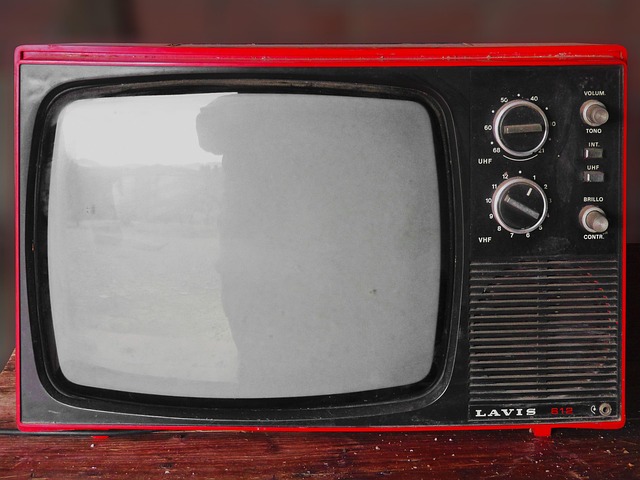
Enter “Christian” TV—i.e., daily, marathon programming on whatever sort of channel—and suddenly we are faced by the preposterous and alarming spectacle of The Saints Adrift! And this is only because too few Christians have yet discovered that the constructive viewing of “Christian” TV requires as much discrimination and more analysis than does the non-destructive viewing of “secular” TV. For no reason whatever, Christians assume that all TV evangelists, teachers, panelists, and musicians are “doing the Lord’s work” rather than their own, and are therefore above bias and beyond criticism. (Jim and Tammy, of course, lost their exemption from reproach some months ago; but faithful “Christian” TV fans remember that they never did quite trust Tammy. Who could trust anyone who wears more make-up than Boy George?) Even now that ‘accountability’ has become a watchword among spiritual empire-builders, few of their viewers seem to care that this standard applies only to their money. It does not extend to their doctrine.
Does doctrine matter? The Reformed Christian must answer “yes,” whether or not he is happy about it. Is it possible to know the Bible so well and to quote it so frequently as do the stars of “Christian” TV—and yet do so in error? Again, the Reformed Christian must answer “yes.” Is it possible for a well-grounded Calvinist to be led astray by prolonged exposure to Bible teaching? This writer’s response from personal experience is an emphatic “yes!”
It is their constant reference to the Bible which makes these men, when they err, such formidable agents of confusion. Christians are predisposed to accept what they are told, when it is supported by Scripture -provided the application is not a glaring distortion. Sermons which appeal to Scripture find them with their defences down and their critical faculties suspended. They trust Bible preachers to have done their homework, to have determined that sermon texts are not being quoted out of context or in disharmony with other ones. Seldom do viewers reflect that few if any of their favorite TV teachers belong to a tradition which requires her spokesmen to conform their exegeses to any systematic theology or time-tested rule of scholarship.
Perhaps an Arminian sermon now and then “couldn’t hurt.” After all, even Arminian evangelists preach the Gospel; and Calvinists believe that God will save the Elect, whether or not they have wit enough to perceive the Scriptural imperative of Election. But it is Fact that a prolonged, uncritical diet of that superficial treatment on favorite verses which characterizes free-lance holy men will in time cause one’s own cherished creeds, confessions, and canons to sound foreign.
The Calvinist/Arminian controversy is neither dead nor academic. The Calvinist’s God is a Person quite different from the Arminian’s; likewise ‘the Calvinist himself, as a man, is or perceives his nature to be quite different from the Arminian. With rare insight and boldness, Kenneth Good asserted,
Man is by nature an Arminian. The basically human philosophical foundation of the system is quite compatible with his inherited rationalism. When this is combined with some semblence of Biblical reference (or supposed authority) his natural religious inclinations are satisfied, and he emerges from whatever mental and spiritual exercises have made up his experience, complacent in his “theology.” This position of psychological security he does not wish to have disturbed. In fact, he will fiercely defend it against any real or imagined threat?
Our sanctified screens are alight, from morn till night, with the faces of men of this stamp. And many of us are too vapor-brained, or have grown to dulled (“weary”) by “much hearing,” to “test the spirits” effectively.
We have forgotten that Satan himself can and does misquote Scripture. We are fascinated by the ‘perks’ and ‘kicks’ of Charismatica, not realizing (because, sensibly, they don’t tell us,) that these people hate everything we stand for.
The common denominator of all Arminian groups, whether of recent or remote origin, is their united animosity toward Calvinism. Irrespective of other differences in doctrine, they are in accord on their willingness to vigorously attack any or all of the “five points.” A nearly infallible symptom ofArminianism is the tendency toward emotional outburst . . . against any form of Calvinism. A sort of “Calviphobia” develops in the Arminian mind which is easily discerned whenever related subjects are introduced?
Not one Reformed church, ancient or modern, has ever diluted or abandoned its Calvinism through a knowing decision based on scholarly dispute.
When Arminianism challenged Calvinism within the framework of an established theological system, the results proved to be disasterous to the former . . . . the best interests of the Arminians are served when they quietly go their separate way. They are no theological match with the Calvinists.3
Seldom did such infidelity result from dogmatic heterodoxy in the pulpit. Almost always it reflected a gradual Closing of the Calvinist Mind, to paraphrase the title of Dr. Bloom’s recent and provocative book. The time came, in each case, when church ·members would not endure, (or even recognize!) sound doctrine. Rather, “having itching ears, they heaped to themselves teachers who turned their ears from the truth.”
Most of us can remember when, first “Christian” radio, then “Christian” TV, became realities. Many of us know people who hailed these developments with a delight all out of proportion to whatever quality of word or music was to be expected of any medium which must cater to a widely diverse audience. They seemed almost to be relieved, as if some long famine had ended and at last they were able to indulge in the kind of appliance marathons their neighbors took for granted.
Without judging at all this kind of ceaseless aural barrage, it should be obvious that constant or frequent subliminal input to the brain of messages which are not “kosher”—but which aren’t, either, sufficiently “unclean” to jangle our warning bells must have a brainwashing effect in the long run. And when, e.g., the Canons of Dort have come to sound quaint, harsh, or (God forbid!) unscriptural to us, it will already be too late. The damage will have been done, and another Reformed community will have “lost its savor.”
Is anyone saying that it’s a sin to watch “Christian” TV? Of course not! Or that “Christian” TV is best avoided? No, not even that. Redeemed common sense does suggest, however, that no medium in this world can be trusted to invade our untended brains for hours on end-silence is a gift from God!and that “Christian” media listening requires even more thoughtful discrimination than “secular.” After all, our brains do not belong to us any more than our lives do; they’re God’s brains. Stewards, en garde!
1Kenneth H. Good, Are Baptists Calvinists?, Oberlin, OH: Regular Baptist Heritage Fellowship, 1975, p. 87.
2Ibid., pp. 68–69
3 Ibid., pp. 70–71
John D. Teague lives at 1661 Madison Ave., S .E., Grand Rapids, Mich.