


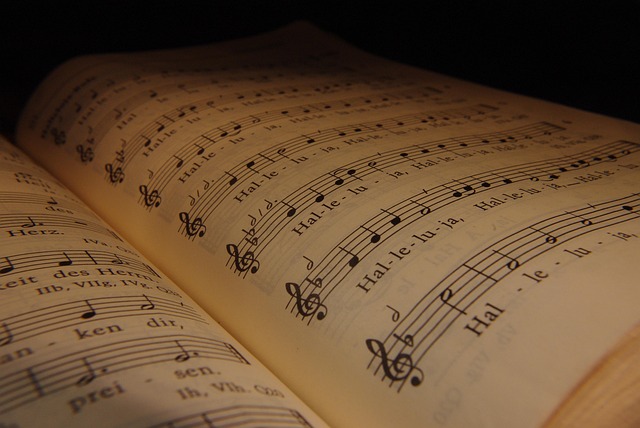
Songs of praise and thanksgiving have been an integral part of Reformed worship through the centuries. In my own lifetime the old Psalter and the Psalter Hymnals of the 1930’s and 1950’s had served well. Now we have a new songbook; one for which I never sensed a groundswell of request within the denomination. Nevertheless, bureaucratic decisions within the denominational building mandated that we should have this new songbook. Now that we have it and use it, candor compels me to say that a blessing has been taken from me during worship services far too often.
Before I explain why, allow me to posit some examples from various fields of art so that you can understand my sensitivity. First, who would brazenly alter the colors and tones in the painting The Night Watch of Rembrandt now on display in the Rijksmuseum of Amsterdam? Who would have the gall to chisel on the sculpture of The Thinker of Rodin with the excuse it needed a little more symmetry here or there? What person has such audacity that he thinks another verse should be added to the fine poem of Robert Frost “The Road Not Taken”? What person is there who feels authoritative enough to alter completely the eulogy of Marc Antony in the play “Julius Caesar” by William Shakespeare? Yet, time and time again, I see such liberties taken with songs in the new song book approved by synod.
In the song “Blessed Assurance” by Fanny Crosby I see an added verse inserted into that song by another versifier much like the white frosting snuggled into an Oreo cookie. When we sang that song in a church service, I was stunned. Perhaps such things have been done on other occasions; nevertheless, as a former English teacher I feel such intrusions into the works of art of noted poets is a clear violation of respect and propriety. In several other songs where the poets have used pronouns such as “Thy,” “thee,” and “thine,” the music committee of the new song book have ignored poetic sensitivities and in their place have substituted the pronouns of the street such as “you” and “your.” It is most certain that if the poets of these original poems had meant to use “you” and “your” they would have since these pronouns were spoken in their own day. The poets, however, did not, for they must have felt that pronouns like “thee” and “thy” served better for the sound and rhythm of their poems. For over fifty-five years I have sung “My Jesus I Love Thee.” Now I wonder when I will be asked to sing “My Jesus I Love You.” To me who likes a little sugar in his coffee it would be like asking me to switch to salt in my coffee.
Too, in the former Psalter Hymnal the Psalms had ‘their own separate division within the book. In the new songbook several excellent ones found in the previous Psalter Hymnals have been dropped, and many that are still used are interspersed throughout the book. So one is left with the feeling that this tactic is but a subtle step to remove the Psalter section altogether from future hymnals. We suffer a great loss now with this process of deletion and dilution of the Psalms. However, their final and complete removal will be a clear indicator how far we have departed from our Reformed heritage.
The new song book includes several children-like choruses better suited for song books in our elementary Christian schools. The hymns we sing as adult believers should have sound theological contents. Choruses of repetitive lines hardly effect this.
Other things could be written about this new song book; however, what has been stated expresses my greatest dissatisfaction with the book. Needless to say, the liberalism rampant within our denomination only proves that nothing is inviolable to its adherents.
P.S. My strong feelings about this new songbook keep me from dignifying it with its own title. It amazes me that other members have not expressed their incense about this book. Perhaps some do not have a feel for words nor a sensitivity for propriety.
John H. Sietsema lives at 2016 Rosewood S.E., Grand Rapids, MI 49506.