


Throughout history, people have known that some of the rocks of the earth have fossils entombed in them. Shells of marine creatures are relatively easy to find, but it is generally in museums that we are able to view the remains of plants, fishes, reptiles, mammals and other once-living organisms. People have asked questions: What are these fossils in the rocks? What do they mean? How did they get there? The answers are not so easy! Debate over differences of view continues to this day.
Before the theory of evolution became popular, it was generally believed that God had created all the plants and animals, and that great catastrophes had buried living things in sediment, after which they turned into fossils. Those who studied the fossil record found their creationistic views consistent with the evidence from the rocks.
Fossils and Darwinism
Although Charles Darwin was interested in fossils, he never specialized in their study. Rather, Darwin was a naturalist, who concentrated his attention on living things. He was impressed by the amount of variation which organisms exhibited, and he used this as evidence to support his theory of evolution by natural selection. He saw no limit to variation. The theory proposed was that continual small gradual changes, when selected according to the principle of survival of the fittest, were able to change fishes into amphibians, amphibians into reptiles, and so on. Darwin believed he had plenty of evidence to show variation in the present. But what about the past? If his theory is true, should we not expect the fossil record to document the origin of species – illustrating the gradual changes that were necessary to transform one type of organism into another. Do the fossils confirm Darwin’s evolutionary ideas?
It is interesting to note that at first Darwin’s theory was not well received by palaeontologists—the scientists who study fossils. They could not see any evidence of the gradual changes predicted by his theory of evolution by natural selection. Some variation was present, but nothing to suggest one type of animal changing into another. The response of the Darwinists was to say that the fossil record was both imperfectly preserved and imperfectly known. They referred to the existence of numerous gaps in the geological record and suggested that there would always be difficulty in finding “transitional forms” between species. However, they also held out the hope that some of the gaps would be filled as a result of subsequent collecting.
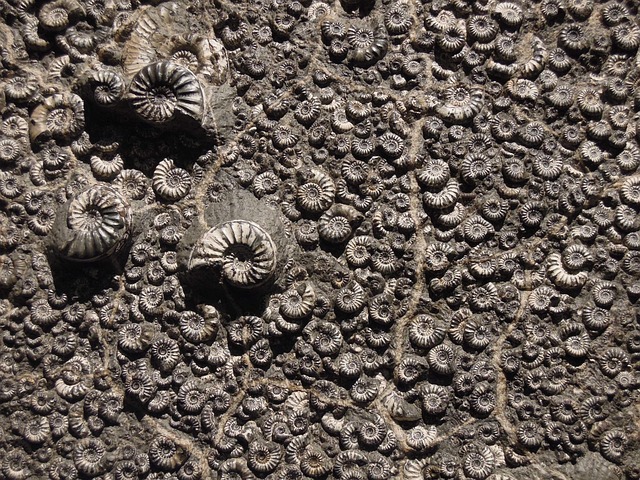
Over 100 years have passed—and millions of man-hours have been spent examining fossils. Has the hope been fulfilled? Have the transitional forms been found? Until recently, the general public have been given the impression that Darwinism has been amply confirmed by the fossil record. In 1958, the British Museum (Natural History) displayed an exhibition on evolution to mark the 100 years anniversary of the first publication on the subject by Charles Darwin and Alfred Russel Wallace. In the exhibition handbook, Sir Gavin de Beer said this about the fossil record: “The palaeontological record provides evidence of the course of evolution in the past. Fossil material is in places now so rich that it can be used for quantitative studies in evolution.” The reader is given no hint of the problems facing evolutionary theory caused by the fossils. At that time, de Beer and many other leading scientists presented a picture of the fossil record which today must be recognized as seriously defective.
Fossils and New Ideas About Evolutionary Change
The last 10 years has seen a remarkable change in discussions about Darwinism. Scholars are much more open in their criticisms of the different theories. Again, palaeontologists have led the way. It seems that the majority of palaeontologists have never been happy with Darwin’s “gradualism,” because they do not see the evidence for gradual change in the fossil record. Whilst they recognize the existence of numerous gaps in the sequence of sedimentary rocks , they are not convinced that the fossil record is as impoverished as Darwin had suggested in “The Origin of Species.” Nowadays, most palaeontologists are ready to admit the nearuniversal absence of transitional forms and are not willing to explain them away geologically. It is important to realize that although these palaeontologists reject the idea of natural selection acting on small changes (gradualism), they still believe in evolution. The new theory is known as “Punctuated Equilibria,” and it postulates long periods without significant change terminated by short periods of very abrupt change. In their thinking, these evolutionary bursts occurred sufficiently rapidly to make it unlikely that transitional forms were preserved as fossils. Although this model of evolutionary change is compatible with the fossil record, it conflicts with the theoretical ideas about the mechanism of evolution which have been developed by the biologists. The evolutionary biologists rightly complain that the supporters of punctuated equilibria have no mechanism to account for rapid evolution. They also revive the argument which says that the fossil record is so inadequate, that it can never be used as evidence for or against Darwinism. And so the controversy continues!
Points For Thought
What are we to learn from this debate? Obviously, it is very easy to get lost in the technicalities, and so a few general points are noted here.
1. It must be overlooked that the expectation of Darwin’s theory about the evolutionary changes occurring in living things in the past have never been confirmed by the fossil record. The evidence for Darwinian gradualism in the fossil record is nonexistent. It seems so obvious that if this major prediction cannot be justified, then it is necessary to reexamine the original theory! The palaeontological evidence against gradualism has always existed—and has become stronger with the passing of years. Darwin’s original approach was to emphasize the fragmentary nature of the fossil record, but over 100 years of geological investigation must now be taken into account. Gradualistic evolution can no longer be defended by appealing to an inadequate fossil record.
2. Scientists have allowed theoretical ideas and personal prejudices to influence their handling of the evidence. Why have scientists made claims about the fossil record which are nowadays recognized as misleading? There is a human aspect to all scientific work, and it is particularly significant when it comes to the study of origins. Those who believe in creation must believe in a Creator. Those who wish to deny the existence of a Creator God must find a naturalistic explanation of origins—and evolutionary theories provide a way of explaining how Jiving things have come into existence without the need to invoke divine activity.
3. Creationists predict an absence of transitional forms in the fossil record. They do not believe that one type of creature can change into another type, for God has made all living things to reproduce “according to their kinds.” Whatever else might be said about the fossil record, it is quite consistent with this prediction of the creationists. Consequently, creation has a right to be considered as an explanation of origins.
The surface of our planet contains the fossilized remains of once living plants and animals. For over 100 years, it has been customary to interpret the fossils only from within the framework of the theory of evolution. This article has argued that an alternative explanation of origins should be considered: divine creation. The absence of transitional forms in the fossil record is an embarrassment for evolutionists, but is the expectation of creationists. Consequently, it is time to think again about the meaning of the fossils!
This ankle is reprinted, with permission, from Biblical Creation, a Scotch journal of 30-40 pages published every four months by The Biblical Creation Society. This organization was founded in 1976 to unite Christians convinced of the importance of the Biblical teaching on creation and its incompatability with the general theory of organic evolution. It is concerned because many Christians accept this theory uncritically, particularly students, teachers, and others involved in education, and it seeks to help Christians think through these matters from a serious, Biblical standpoint. Its address is The Biblical Creation Society, 51 Cloan Crescent, Bishopbriggs, Glasgow G64 2HN (Scotland). Our readers who are interested in this subject may wish to look up articles on it (by John Ham and Dr. Gary Parker) in our March and April 1983 Outlooks, which have been cleared for reprinting by the Biblical Creation Society.